


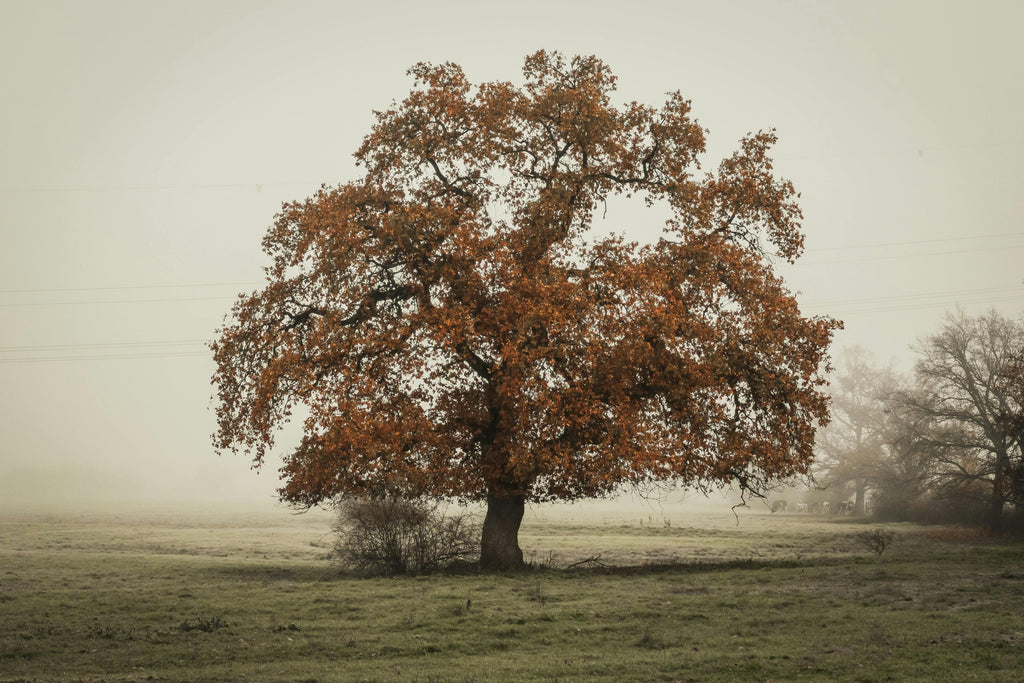
Zhuangzi's Useless Tree Parable (Human World Chapter)
樗樹大而無用,眾人莫之能用也。
師子過而弗顧,徒子曰:「大樗而無用,可謂賢乎?
師子曰:「吾無以用之也。
徒子曰:「何以無用之?
師子曰:「此樹曲而不直,節多而不齊,若削之則斧斤傷矣,若斫之則腐朽矣,若鑿之則穿孔矣,若斫則竊矣。
徒子曰:「子何以言其無用?
師子曰:「吾不知其所用也。
徒子曰:「其必有用也。
樗曰:「吾嘗為無用而久存,幾不免於死,今得全乎此,吾用大矣。若我有用,豈能長成此大者哉!
Shih the carpenter was on his way to the capital of Ch'i with his apprentice. Coming upon a huge ailanthus tree by the shrine of a local village, the apprentice marveled: "Take a look at that tree! Never was there such a useless one!"
Shih glanced at it briefly but continued on without stopping. "What do you think of it?" asked the apprentice. "Have you no opinion?" "What is there to think about?" replied Shih. "It's a useless tree. A boat made from it would sink, a coffin would soon rot, a vessel would split, a door would ooze sap, and a beam would be riddled with worms. It's worthless timber and of no use. That's how it reached such an age."
That night Shih dreamed the tree appeared to him and said: "What are you comparing me to? Are you comparing me to those useful trees? The cherry apple, the pear, the orange, the citron, and all the other fructiferous trees and shrubs—as soon as their fruit is ripe, they are torn apart and subjected to abuse. They are hacked and stripped; their big limbs are broken off, their little limbs torn away. Their lives are bitter because of their usefulness, and they do not complete their natural span but are cut down in their prime. This is the disaster of being useful.
"As for me, I've been trying a long time to be of no use, and though I almost died, I've finally got it. This is of great use to me. If I had been of some use, would I ever have grown this large? Moreover, you and I are both things. What's the point of things condemning things? You, a worthless man about to die—how do you know I'm a worthless tree?"
Shih woke at dawn, and when his apprentice asked if he'd slept well, the master replied: "Forget it—say no more! There's plenty of room here underneath this useless old tree, with its ancient branches grown so wide. So, we might as well enjoy it, for however long it lasts."
The Useless Oak
In Zhuangzi's parable, a gnarled oak stands large and still beside a road, its twisted trunk unfit for timber. A carpenter dismisses it as worthless—no boat, beam, or tool could come from such wood—yet this very uselessness lets the tree endure, spared by the axe that fells straight pines and fruitful cherries.
Nature's Quiet Strength
Useful trees bear fruit or yield planks, but their value draws harm: branches stripped, lives cut short before their natural span. The oak, by contrast, grows crooked and free in the wasteland, offering shade to wanderers without inviting the blade. This mirrors the forest's deeper rhythm—conifers like spruce or birch persist not by serving every need, but by holding to their form amid winds and seasons.
In herbal traditions, plants teach the same: over-harvested roots exhaust the earth, while resilient barks and needles quietly renew. The oak's knots preserve its essence, much as wild-harvested buds carry vitality without depletion.
Human Harmony in Moderation
Neither endless toil nor idle waste, but a middle path where one contributes without exhaustion.
Be useful enough to nourish community—like shade or a simple tea blend—yet useless to those demanding constant yield. This preserves vital energy, fostering longevity free from burnout or envy.
Modern life pulls toward extremes: the overproducer drained dry, the recluse forgotten. Embody the oak instead—withdraw from fruitless strife, rest in natural shape, and thrive through unforced presence.
Life blooms in balance: not too sought, not too hidden, but enduring like the oak's silent witness.
Holiday Season is for Being Usefully Useless
Reflecting on Zhuangzi's useless tree parable during the Christmas and New Year holiday season can be especially helpful as this time often brings pressure to be productive, social, and constantly “useful” in various ways—buying gifts, hosting, attending events, or setting ambitious resolutions. The parable gently reminds us that not all value comes from outward usefulness or visible achievement. Like the “useless” oak, there is profound wisdom in embracing rest, stillness, and simply being without the need for constant output or approval.
This reflection encourages letting go of the exhausting cycle of striving and comparison that the holidays can amplify. It invites a peaceful acceptance of one's natural rhythm and limits, promoting self-compassion and preservation of energy. In a season that can overwhelm with expectations, the parable shows that longevity, safety, and inner peace come from balance—being “useful enough” to nurture connection and joy, yet “useless enough” to protect one’s well-being. This helps cultivate a grounded, calm presence that can sustain through the festivities and beyond.
Winter aligns with the Water element, a time of profound stillness, introspection, and conservation of jing (essential energy). Remember, this holiday season is really about the winter solstice, marking the year's deepest yin—shortest days, longest nights—calling for rest to replenish kidneys and preserve vitality, rather than exertion that depletes reserves. Overburdening the body here disrupts harmony, leading to exhaustion or imbalance, much like forcing a seed to sprout in frozen soil.
Related post
18
Dec

17
Oct
17
Oct

01
Aug

07
Jul


